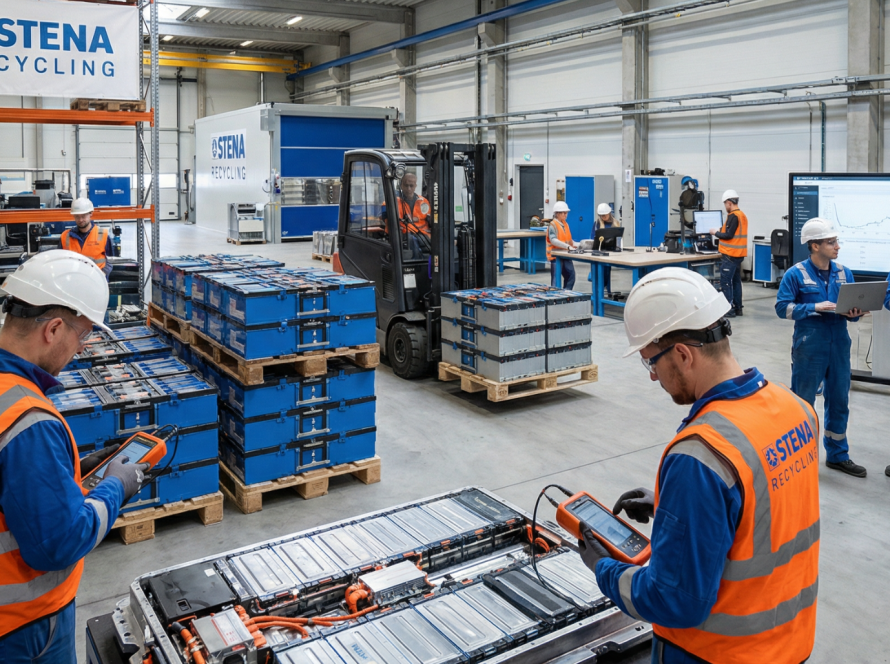
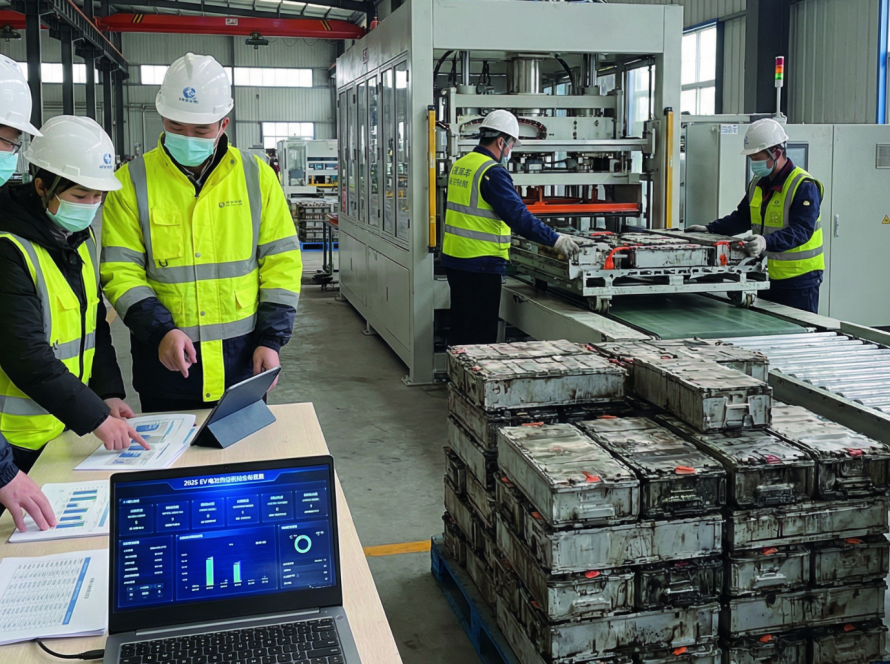
The global battery industry is entering a structural transformation. What was once viewed as an environmental obligation is now becoming a strategic growth engine, driven by regulation, data transparency, and supply chain security. Between 2025 and 2035, the battery recycling and second-life battery market is set to move decisively from fragmented experimentation to industrial-scale deployment, underpinned by binding policy frameworks-most notably in Europe-and rising geopolitical pressure to localize critical materials.
According to industry forecasts, the market will exceed USD 3.59 billion in 2025, with strong, sustained revenue growth through 2035. For executives across automotive, energy storage, materials, and infrastructure, this is no longer a peripheral sustainability issue-it is a core strategic capability.
EU Battery Regulation: Turning Circularity into a Legal Mandate
Europe has fundamentally altered the economics of battery recycling. The EU Batteries Regulation (Regulation 2023/1542) transforms recycling from a voluntary initiative into a compliance-driven market with enforceable obligations.
Key regulatory levers include:
- Mandatory collection, treatment, and recycling efficiency targets
- Defined material recovery thresholds for lithium-based batteries
- Producer responsibility across the full battery lifecycle
- Phase-in requirements for design-for-removability and recyclability
Critically, these rules extend beyond environmental intent. They create predictable, auditable demand for recycling services, incentivising OEMs to secure long-term take-back and processing agreements rather than relying on spot markets. This regulatory certainty is already underwriting investment decisions across hydrometallurgical and pyrometallurgical recycling capacity in Europe.
For battery and vehicle manufacturers, recycling is now a balance-sheet issue-impacting compliance risk, cost structures, and access to future markets.
Digital Battery Passports: Data as Infrastructure
One of the most consequential shifts introduced by the EU regulation is the digital battery passport. From 2027, EV and industrial batteries sold in the EU will require QR-code–enabled access to standardized data, including:
- Carbon footprint metrics
- Recycled content levels
- Battery chemistry and origin
- Lifecycle and end-of-life status
Early pilots-such as Volvo’s EX90 battery passport launched in 2024-demonstrate how digital traceability is moving from concept to execution. Platforms like Catena-X are rapidly standardising interoperability across the ecosystem.
For recyclers and second-life operators, this data layer dramatically reduces transaction friction. It enables:
- Faster end-of-life routing
- Verified eligibility for recycled-content mandates
- Bankable provenance for second-life battery assets
In effect, digital passports convert battery waste into financeable inventory, accelerating capital deployment across recycling and reuse markets.
Commodity Cycles and Execution Risk: A Reality Check
Despite strong structural tailwinds, battery recycling remains economically sensitive. Revenue models are exposed to volatility in lithium, nickel, and cobalt prices, as well as the spread between virgin and recycled materials. When commodity prices soften, margins compress-particularly for merchant recyclers without captive offtake agreements.
Execution risk is also non-trivial. High-profile examples illustrate the challenge:
- Li-Cycle paused construction of its Rochester Hub amid cost escalation and financing complexity.
- Umicore re-sequenced major recycling investments in 2024, opting to optimise existing Asian capacity while awaiting clearer demand signals.
These cases do not undermine the circular economy thesis-but they highlight a critical insight for investors and operators alike: secured feedstock, integrated value chains, and brownfield expansions consistently outperform greenfield megaprojects.
US Trade Tariffs and the Acceleration of Regionalization
Recent US trade tariffs targeting EVs, batteries, and critical minerals-particularly from China-are reshaping global battery recycling dynamics. While tariffs raise near-term costs for manufacturers dependent on imported components, they are also catalysing localized recycling and material recovery investment.
The strategic implications are clear:
- The US is accelerating domestic recycling capacity to reduce supply chain dependency
- Europe and Asia are diversifying trade routes and strengthening internal processing
- Recycling is increasingly viewed as industrial infrastructure, not waste management
In this context, tariffs act less as a market constraint and more as a forcing mechanism for regional self-sufficiency, innovation, and policy-aligned capital deployment.
Read about Brazil’s EV Growth Outpaces Battery Recycling Infrastructure
Second-Life Batteries: Unlocking Value Beyond Recycling
Beyond material recovery, second-life batteries represent a parallel growth engine. Used EV batteries-often retaining 70–80% of their original capacity-are increasingly redeployed into:
- Energy storage systems (ESS)
- Grid balancing and peak shaving
- Backup power and resilience applications
Digital traceability and regulatory clarity are rapidly de-risking this segment, allowing second-life assets to be valued, insured, and financed with greater confidence. For utilities and energy developers, second-life batteries offer a cost-effective pathway to scale storage capacity while extending asset lifecycles.
What This Means for the C-Suite
The battery recycling and second-life battery market is no longer optional. It sits at the intersection of regulation, resilience, and revenue growth.
For senior leaders, the strategic questions are urgent:
- Do we control our end-of-life battery flows-or will regulators and competitors do it for us?
- Are our recycling and second-life strategies aligned with EU compliance timelines?
- How exposed are we to commodity volatility without recycled-material hedging?
- Where should we invest: technology, partnerships, or vertical integration?
Between now and 2035, winners will be those who treat battery circularity not as a sustainability add-on, but as a core operating system for the electrified economy.