Introduction
China’s implementation of strict EV battery recycling regulations in 2026 marks a defining moment for the global electric vehicle (EV) ecosystem. Far from being a regional regulatory update, this policy represents a strategic shift toward a mature, circular, and resilient global EV economy. For C-level executives navigating electrification, sustainability, and long-term capital allocation, China’s move offers critical insights into where the global market is headed next.
As the world’s largest EV manufacturer and battery producer, China’s actions inevitably set global benchmarks-in technology, governance, and economic viability.
From Compliance to Competitive Advantage
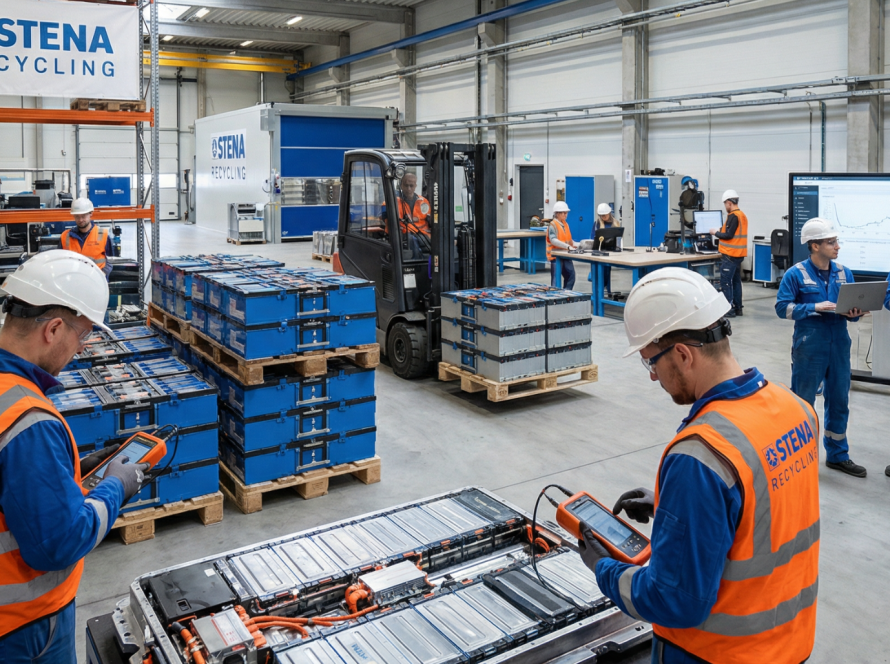
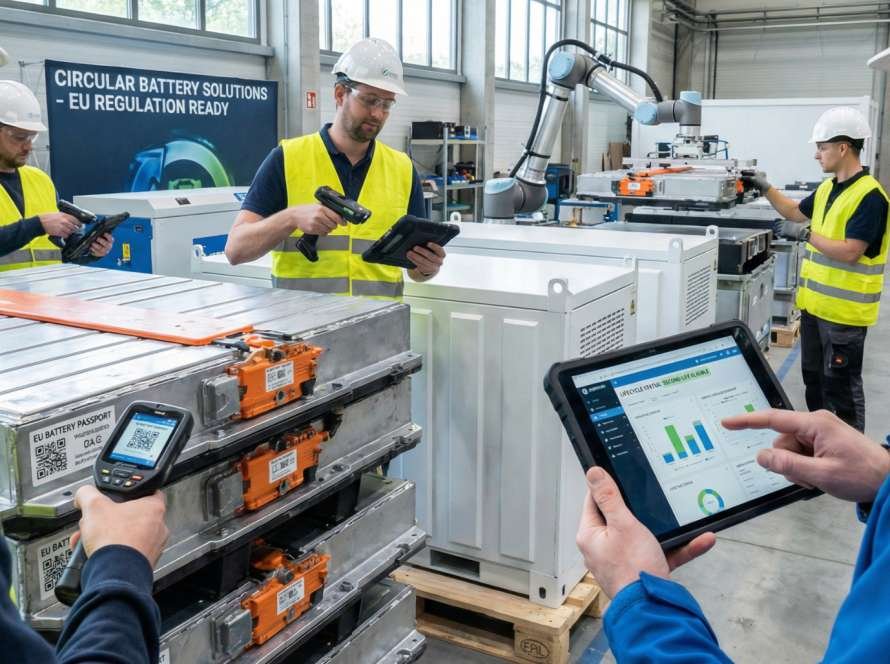
Historically, EV battery recycling has faced challenges: fragmented infrastructure, safety risks, and high disassembly costs. China’s new framework decisively addresses these issues by mandating full lifecycle traceability-from production to end-of-life utilization-through a national digital tracking platform.
The global implication is clear: battery recycling is no longer a cost center. It is becoming a strategic lever for margin protection, supply security, and ESG leadership.
With recovery rates exceeding 95% for critical materials such as lithium, nickel, cobalt, and manganese, China has demonstrated that recycling at scale is both technically feasible and economically compelling.
Strengthening Global Supply Chain Resilience
China’s policy effectively transforms retired EV batteries into a secondary raw-material supply, reducing dependence on mining-heavy, geopolitically sensitive regions.
For global automakers, battery manufacturers, and energy companies, this signals:
- Greater price stability for critical minerals
- Reduced exposure to supply disruptions
- Improved long-term planning confidence
In an era where supply chain resilience is as important as innovation, China’s approach provides a repeatable global model.
Accelerating the Global Circular Economy
By enforcing standardized battery identification, recyclable materials, and clear dismantling protocols, China is influencing how batteries will be designed worldwide.
This will drive:
- Global convergence around recyclable battery architecture
- Faster growth of second-life battery applications
- Expansion of battery recycling as a standalone global industry
Circularity is rapidly evolving from a sustainability narrative into a core business strategy.
Unlocking Global Capital and Policy Alignment
China’s regulated, transparent recycling ecosystem significantly lowers investment risk-unlocking institutional capital for recycling infrastructure, urban mining, and energy recovery solutions.
At the same time, regulators across Europe, India, Southeast Asia, and North America are closely observing China’s execution. The result is likely policy convergence, accelerating global adoption of lifecycle-based EV regulations.
For multinational enterprises, this alignment reduces compliance complexity and strengthens cross-border scalability.
Boosting Long-Term EV Adoption and Trust
Importantly, stricter recycling regulations do not slow EV adoption-they strengthen it. By addressing environmental concerns around battery disposal, China’s policy enhances consumer confidence, investor trust, and political support for electrification.
The long-term outcome:
- Lower total cost of ownership for EVs
- Stronger public acceptance of large-scale electrification
- Faster transition from internal combustion to electric mobility
Read about Battery recycling and second-life battery market enabling circular economy and resource security
Executive Takeaway
China’s 2026 EV battery recycling rules signal a global inflection point. The next phase of EV leadership will not be defined by who manufactures the most batteries-but by who controls, optimizes, and monetizes the entire battery lifecycle.
For C-suite leaders, the message is unmistakable:
The future of the electric economy belongs to organizations that embed circularity, resilience, and lifecycle intelligence at the core of their strategy.
Those who align early will shape the rules of the next decade of global electrification.