Building the Next Phase of EV Sustainability
The global shift to electric vehicles is accelerating, but long-term success will depend on how effectively the industry manages the full lifecycle of lithium-ion batteries. As EV adoption rises, so too does the demand for sustainable systems that recycle materials, extend product life, and minimize environmental impact. Two companies at the forefront of this effort, EVE Energy and Miracle Automation, are reshaping the lithium battery ecosystem through strategic partnerships and circular innovation.
Their combined efforts mark a turning point for an industry seeking balance between growth, sustainability, and energy security.
The Strategic Imperative of Closed-Loop Systems
A closed-loop lithium battery ecosystem integrates production, usage, and recycling into a continuous cycle. Instead of relying on a linear model that extracts, manufactures, and disposes, the closed-loop framework reintroduces valuable materials—such as lithium, cobalt, nickel, and manganese, back into manufacturing.
This integration offers three major advantages: it reduces exposure to volatile raw material markets, enhances supply-chain resilience, and aligns with tightening global environmental regulations. For companies and investors alike, closed-loop operations are rapidly becoming both a sustainability mandate and a competitive differentiator.
EVE Energy: Scaling Circular Value through Global Collaboration
EVE Energy has positioned itself as a leader in lithium battery production and recycling by pursuing a multi-layered circular strategy. Its focus extends beyond manufacturing efficiency to include lifecycle tracking, digital management, and partnerships that reinforce end-of-life recovery.
Recent projects include expanding the deployment of high-capacity cylindrical batteries for industrial logistics vehicles in Europe, supported by local recycling initiatives. The company’s “Digital 2.0” transformation integrates data systems and lifecycle traceability tools that align with evolving European sustainability standards, including digital battery passports.
In parallel, EVE is expanding recycling operations across Asia and Europe through partnerships that recover valuable metals from both end-of-life batteries and manufacturing scrap. These developments strengthen its long-term position in the global energy storage value chain while reducing dependence on external suppliers.
Miracle Automation: Building Recycling Infrastructure at Scale
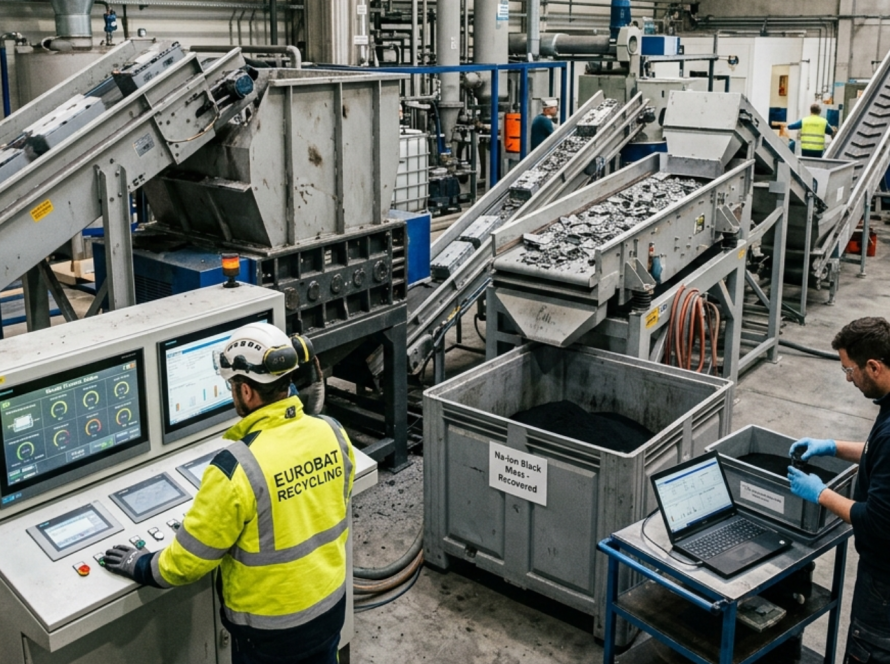
Miracle Automation’s approach complements this evolution by investing directly in recycling infrastructure. Through strategic collaborations with major automotive manufacturers and asset management groups, the company is constructing large-scale systems to collect, disassemble, and recycle used vehicle batteries.
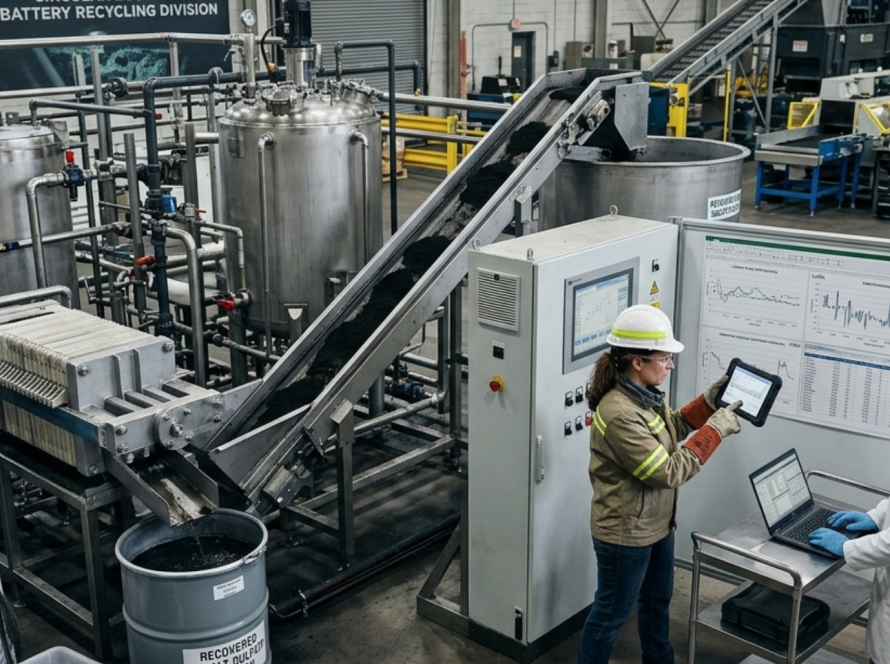
These initiatives focus on integrating collection networks with high-efficiency recycling plants, ensuring that materials such as lithium, cobalt, and nickel are recovered and reintroduced into domestic manufacturing pipelines. By building partnerships across the entire lifecycle, from automakers to recyclers, Miracle Automation is creating predictable material flows and lowering the overall cost of resource recovery.
This model reflects a growing trend across Asia, where closed-loop systems are becoming central to industrial sustainability goals and circular economy policy frameworks.
Market Outlook and Industry Momentum
The global EV battery recycling market is expected to grow exponentially over the next decade, reaching an estimated value of more than $24 billion by 2035. This expansion reflects both regulatory pressure and the strategic necessity of reducing raw material imports.
In the short term, hydrometallurgical processes are expected to dominate due to their higher recovery rates and lower emissions compared to traditional smelting. Over time, advancements in automation, chemical processing, and material separation are likely to enhance the profitability of recycling operations and attract further investment.
Companies with early footholds in these areas, those combining recycling infrastructure with production capacity, are positioned to capture significant market share as global demand for EV batteries accelerates.
Risks, Policy Drivers, and Strategic Alignment
While the momentum is strong, several challenges persist. Global trade uncertainty, fluctuating raw material prices, and evolving regulatory frameworks can affect expansion timelines. Moreover, building recycling facilities requires long-term capital commitments and skilled workforce development.
However, these risks are counterbalanced by rising policy support. Governments across North America, Europe, and Asia are enacting regulations that make circular practices a core requirement of industrial compliance. Digital traceability tools, such as the EU’s Battery Passport initiative, are setting new global standards for transparency and accountability.
The alignment of industrial strategy with regulatory incentives is now a defining success factor. Companies that invest in localized ecosystems, combining production, recovery, and data-driven lifecycle management, are establishing a new benchmark for sustainable competitiveness.
Closing the Loop: The Future of Battery Circularity
The evolution of closed-loop lithium battery ecosystems signals a new era in sustainable manufacturing. What began as an environmental initiative has matured into a business imperative, connecting circular economy principles with energy security and market resilience.
As partnerships deepen and recycling technologies advance, the global EV industry is transitioning from linear production toward continuous value regeneration. The companies building these systems today are not only reducing waste, they are shaping the financial and environmental architecture of the future energy economy.