Brazil’s electric vehicle market is expanding at record speed, driven largely by Chinese automakers. Yet behind the surge in EV adoption lies a structural vulnerability that demands urgent executive attention: battery end-of-life management.
With more than 500,000 electric and hybrid vehicles now on Brazilian roads, the country is approaching a phase where large volumes of lithium-ion batteries will begin reaching retirement-without a fully formed regulatory or industrial framework to manage them.
Regulation Is Lagging Behind Market Growth
Brazil’s battery recycling rules remain nascent, creating uncertainty around responsibility, traceability, and environmental risk. A proposed National Policy on Battery Circularity, introduced in 2025, aims to establish a battery passport system aligned with EU standards. However, the legislation is still under review, with no clear implementation timeline.
This regulatory gap contrasts sharply with China, where automakers are legally responsible for battery collection and reuse, supported by digital tracking and incentives. As a result, China’s EV battery recycling rate reached 40% by 2023, compared to Brazil’s largely undefined performance.
Chinese Automakers: Scale Without Transparency
Chinese brands dominate Brazil’s EV sales, with BYD alone accounting for roughly one-third of the market. While these manufacturers operate advanced recycling systems in China, their Brazilian strategies remain opaque.
Public disclosures on battery reuse, recycling volumes, or logistics are limited, reinforcing concerns that circular practices are treated as optional rather than essential. This inconsistency raises long-term environmental, reputational, and policy risks for the sector.
An Emerging Opportunity for Circular Value Creation
Despite the challenges, Brazil holds strategic advantages:
- Access to lithium, nickel, and graphite
- Advanced academic research capacity
- Early-stage recycling innovation
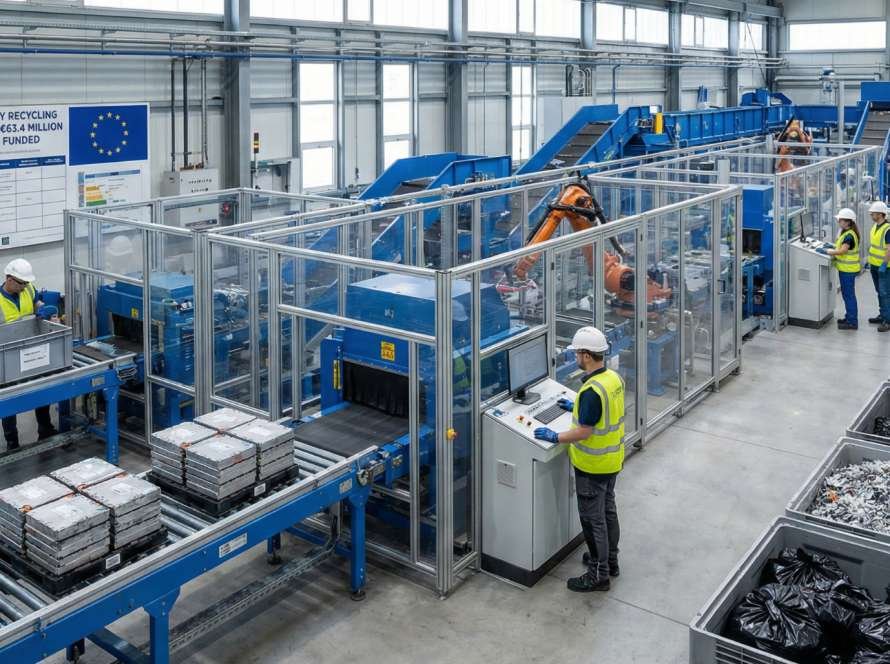
A small but growing group of domestic players is already developing technologies for battery recycling, mineral recovery, and second-life applications. As EV volumes increase, battery recycling could evolve from a compliance cost into a high-value industrial segment.
Read more on: Rapid Growth in the Global EV Battery Recycling Market
The Executive Imperative
Brazil stands at a crossroads. Without clear accountability and traceability, EV batteries risk becoming a future environmental liability. With decisive regulation and industry leadership, they could instead anchor a competitive circular economy.For policymakers, automakers, and investors alike, battery recycling is no longer a downstream issue-it is a strategic pillar of Brazil’s electric mobility future.