How Circular Innovation Can Transform the Future of Energy Storage
Global demand for lithium-ion batteries is surging, powered by the rise of electric vehicles, renewable energy storage, and portable electronics. Yet, as adoption accelerates, so do concerns over sustainability, supply chain security, and resource depletion.
Lithium-ion batteries are central to the energy transition because of their high power density, efficiency, and versatility. However, their production depends heavily on geographically concentrated materials, particularly lithium, cobalt, and nickel, creating both environmental and geopolitical challenges. Managing their entire lifecycle sustainably has become one of the most urgent priorities in clean energy innovation.
A circular economy framework, where batteries are designed, reused, and recycled for continual material recovery, offers a path to balance growth with environmental responsibility.
Design for Recycling
The journey toward circularity begins at the design stage. Creating batteries with disassembly, reuse, and recyclability in mind enables higher recovery rates and reduces waste.
New design approaches emphasize modular structures, standardized components, and simplified fastening systems that allow easier dismantling of cells and modules. Recyclable binders, water-based solvents, and safer electrolytes reduce hazardous outputs, while mechanical joints replace adhesives to improve disassembly efficiency.
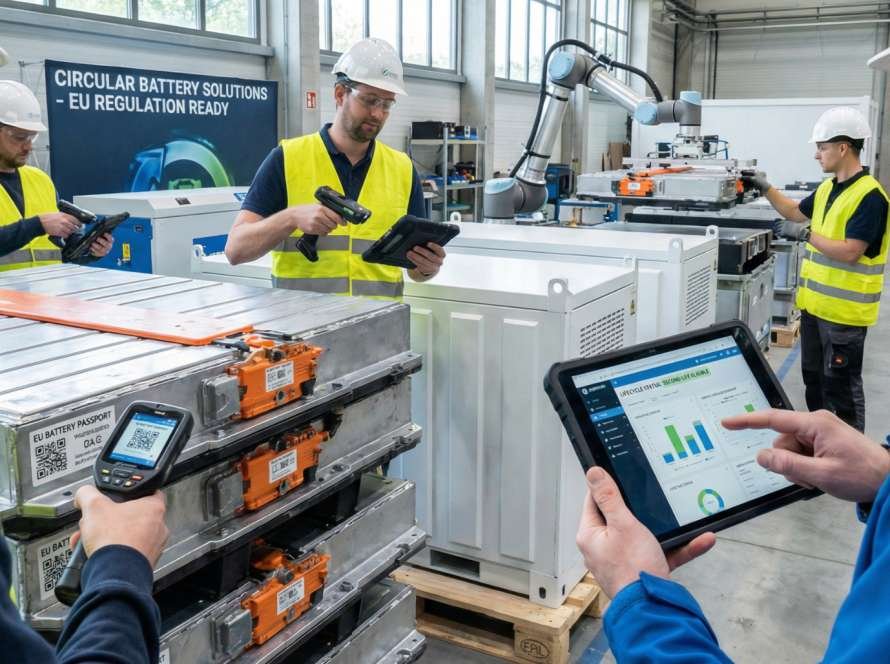
Emerging digital tools, such as product passports, further enhance this process by tracking materials and chemistry across each battery’s lifecycle. These digital identifiers support automation in sorting and recovery, improve traceability, and lower recycling costs.
By embedding recyclability from the start, lithium-ion batteries can transition from a one-way product model to a circular system that conserves materials and supports a more sustainable energy infrastructure.
Reuse and Repurposing
Before recycling, extending a battery’s operational life through reuse can offer greater short-term impact. Electric vehicle batteries, for example, are typically retired when their capacity falls to about 70–80 percent, insufficient for vehicle performance but ideal for less demanding applications.
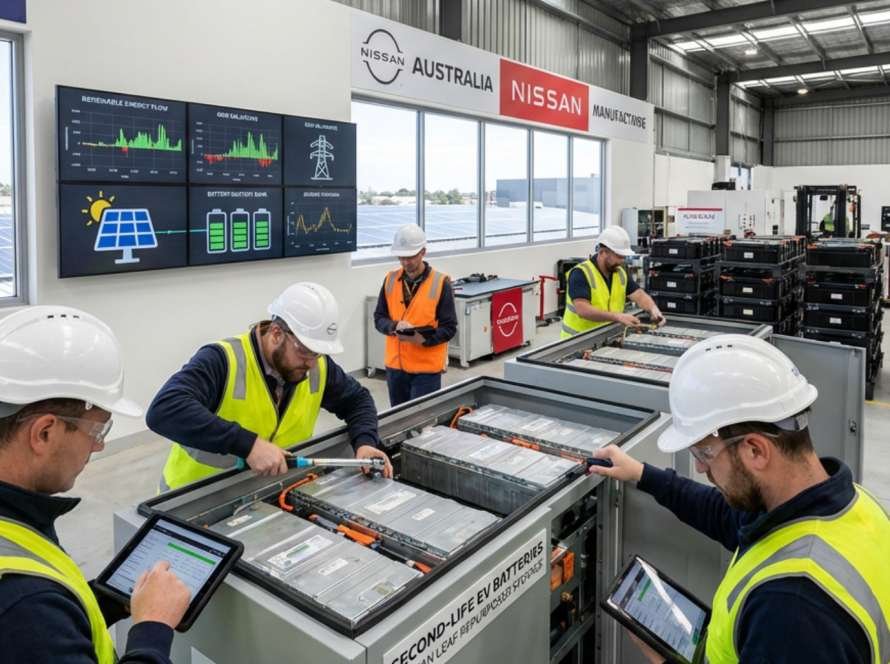
Second-life initiatives give these batteries new purpose in stationary energy storage, grid balancing, and backup power systems. Depending on the chemistry and use case, repurposed batteries can continue to operate for six to 30 additional years.
Industrial projects have already demonstrated viability. Large-scale repurposing installations across Europe and Asia are using retired EV batteries for megawatt-hour energy storage, reducing reliance on newly mined materials while extending overall battery value.
Recycling and Material Recovery
When reuse is no longer feasible, recycling becomes essential. Modern recycling methods focus on recovering valuable metals, lithium, cobalt, nickel, and manganese, for reintegration into the manufacturing cycle.
Hydrometallurgical processes use chemical leaching and purification to extract materials efficiently and with fewer emissions. Pyrometallurgical processes rely on high-temperature smelting, which is energy-intensive but effective for bulk recovery. Direct regeneration, a newer approach, aims to restore cathode materials without breaking them down completely, reducing energy use and preserving material integrity.
Several automakers and energy companies have adopted closed-loop recycling models, reinserting recovered materials into new production cycles. This shift not only reduces waste but also strengthens supply security and lowers the carbon footprint of EV manufacturing.
Rethink and Reduce Strategies
Beyond recycling and reuse, the broader shift toward sustainability includes rethinking how batteries are produced and used.
The rethink approach encourages shared mobility and service-based models that reduce total battery demand. Car-sharing and ride-pooling networks demonstrate how fewer vehicles can serve more users efficiently.
The reduce strategy focuses on cutting material intensity through alternative chemistries. Lithium iron phosphate (LFP) and sodium-ion batteries, for example, eliminate the need for cobalt and reduce dependency on lithium, providing cost-effective and safer solutions for large-scale deployment.
Together, these strategies foster efficiency, minimize environmental impact, and build greater resilience across the energy value chain.
Challenges and Emerging Solutions
Despite rapid progress, achieving full circularity for lithium-ion batteries remains complex. Most current battery designs are not optimized for easy disassembly, making recycling energy-intensive and expensive. Global collection infrastructure is still uneven, especially outside regulated regions like the EU, Japan, and parts of North America.
Safety risks also persist when handling partially charged batteries, as improper disassembly can trigger thermal runaway or chemical leaks. In addition, misconceptions about the quality of recycled materials can limit market acceptance.
Addressing these barriers requires both technical and policy innovation. Design-for-recycling standards, automated dismantling systems, and expanded producer-responsibility frameworks are key enablers. Deposit-return schemes, digital traceability, and coordinated collection networks can improve end-of-life recovery rates.
Public education, certification programs, and third-party testing can also enhance trust in recycled materials, helping shift consumer and industry perceptions.
Toward a Sustainable Energy Future
Circular approaches to lithium battery management are redefining how the world thinks about energy storage. From design to reuse and recycling, the goal is not just waste reduction, but resource renewal.
By closing the loop on lithium batteries, the energy industry can reduce environmental impact, secure critical materials, and enable cleaner, more resilient electrification. The next decade will determine how effectively circular economy principles can be scaled, and whether the batteries powering the green transition can themselves become symbols of sustainability.